
Here’s the Truth About Being Self-Employed and Getting a Loan
If you work a regular job, proving income is easy. Hand over a few pay stubs and a W-2. Done.
But if you’re self-employed – a freelancer, gig worker, small business owner, or contractor – it’s a different game. Your tax returns probably show lower income thanks to legitimate write-offs. That’s great for your tax bill. But it’s terrible when a lender asks, “How much do you actually make?”
You have cash flow. You pay your bills. But on paper? You look broke.
That’s exactly why A One Accountants provides accountant’s letters – also called CPA letters or income verification letters. We help you show lenders what you really earn, without changing your tax returns or stretching the truth.
Let us explain how it works.
What Is an Accountant’s Letter?
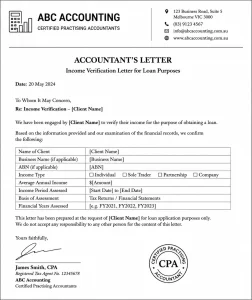
It is a one-page letter on the official letterhead of A One Accountants. In it, we simply state:
-
Who you are
-
What your business does
-
How long you’ve been self‑employed
-
What you actually earn each month (after expenses)
-
That you’ve filed your taxes like you’re supposed to
That’s it. No confusing forms. No hidden tricks.
Lenders read it, and many of them accept it – especially the ones that work with self‑employed people every day.
Wait… Do Lenders Actually Accept This?
Some do. Some don’t. Let us be straight with you.
| Loan Type | Will They Accept Our Letter? |
|---|---|
| Regular mortgage (Fannie/Freddie) | ❌ No – they demand tax returns |
| Bank statement loan | ✅ Yes – they love our letter |
| Hard money / private loan | ✅ Yes – this is perfect for that |
| Personal loan (online lenders) | ✅ Yes – very helpful |
| Car loan (credit unions) | ✅ Usually yes |
So if you’re going to a big bank for a conventional mortgage, sorry – they’ll want your full tax returns. But for many other loans? We can help.
What We Put in Your Letter (So You Know What You’re Getting)
When we write a letter for you, here’s exactly what’s in it:
-
Your name and business name – so there’s no confusion.
-
How long you’ve been self‑employed – lenders like to see at least two years.
-
Your average monthly income – this is the number that matters. We calculate it from your bank statements and tax returns. And we always use net income (what you actually keep), not gross sales.
-
A note that you’re current on taxes – we confirm you’ve filed your last 2‑3 years.
-
Our signature and license number – because we’re real CPAs, and lenders can check.
No fluff. No lies. Just the truth, written clearly.
3 Mistakes We See People Make
Over the years, we’ve watched borrowers trip over the same things. Don’t be one of them.
Mistake #1: Writing the letter yourself
We’ve seen people try. Lenders can tell. They want a CPA’s stamp – not a Word document you typed up.
Mistake #2: Using gross income
Saying “I make $20,000 a month” sounds great. But if your net after expenses is $4,000? That looks dishonest. We always use net.
Mistake #3: Using an old letter
A letter from last tax season is expired. Most lenders want one dated within 60–90 days. We’ll make sure yours is fresh.
The Bottom Line
Look – an accountant’s letter isn’t magic. It won’t trick a conventional mortgage lender into ignoring your tax returns.
But for bank statement loans, private loans, personal loans, and car loans? It works beautifully.
If you’re self-employed, you have real income, and you just need a professional to vouch for you – we’ve got your back.
Call us, email us, or stop by. We’ll look at your numbers, tell you honestly if we can help, and get you that letter fast.